Discover how to avoid booking traps with our ultimate guide on heritage stay Kolkata packages. Enjoy an authentic experience without the pitfalls!

Have you ever thought about how farming can be better for the Earth? Farmers have a big job feeding the world, but sometimes their tools can hurt the environment. Luckily, there's a way to farm that helps protect the planet—it's called eco-friendly farming. In 2025, a new kind of tractor is making that easier: electric tractors. These tractors don’t use gas or diesel, which means they help farmers grow food in a cleaner and greener way.
Electric tractors are becoming popular, especially on smaller farms and organic fields. They are quiet, easy to use, and good for the soil and air. Plus, they can save farmers money on fuel and maintenance. Growing food in a way that protects the Earth is important for all of us, and electric tractors are helping farmers reach those goals. Let’s explore how these tractors work and why they matter so much for sustainable farming today and tomorrow.
Electric tractors run on batteries instead of diesel fuel. This means they don’t make smoke or exhaust that can pollute the air. Inside, they have big rechargeable batteries and powerful electric motors that move the tractor. Unlike regular tractors, electric tractors are very quiet and don’t need as much fixing because they have fewer parts that wear out.
Farmers use electric tractors for different tasks like mowing grass, tilling the soil, pulling trailers, and plowing fields. They are great for places like orchards and vineyards where it’s important to keep the noise low and the air clean. Some popular electric tractor models today include the Monarch Tractor and the John Deere E-Power. These tools show how electric tractors are not just ideas but real machines working hard on farms.
One big reason electric tractors are great for eco-friendly farming is that they don’t pollute the air. Diesel tractors give off harmful gases and tiny particles that can hurt plants, soil, and people. For example, diesel exhaust can cause ground-level ozone pollution, which damages crops and nature. Electric tractors stop all that by running clean without any exhaust.
Another nice thing about electric tractors is that they make very little noise. This quieter work means less stress for farmers and safer environments for animals like cows and chickens—especially in places where farms are surrounded by homes. It also makes early morning or late night jobs easier because the noise doesn’t bother neighbors or workers.
Electric tractors also help protect the soil. Because they don’t vibrate as much and have smoother control, they press down on the ground less harshly. This reduces soil compaction, which is good for soil health and helps crops grow better. The instant torque from electric motors gives farmers precise control, making it easier to manage different tasks without wearing out the land.
Better still, electric tractors cost less to fix and maintain. They don’t need oil changes or many of the repairs that diesel tractors do. All these benefits make electric tractors a smart choice for farmers who want to farm sustainably and save money at the same time.
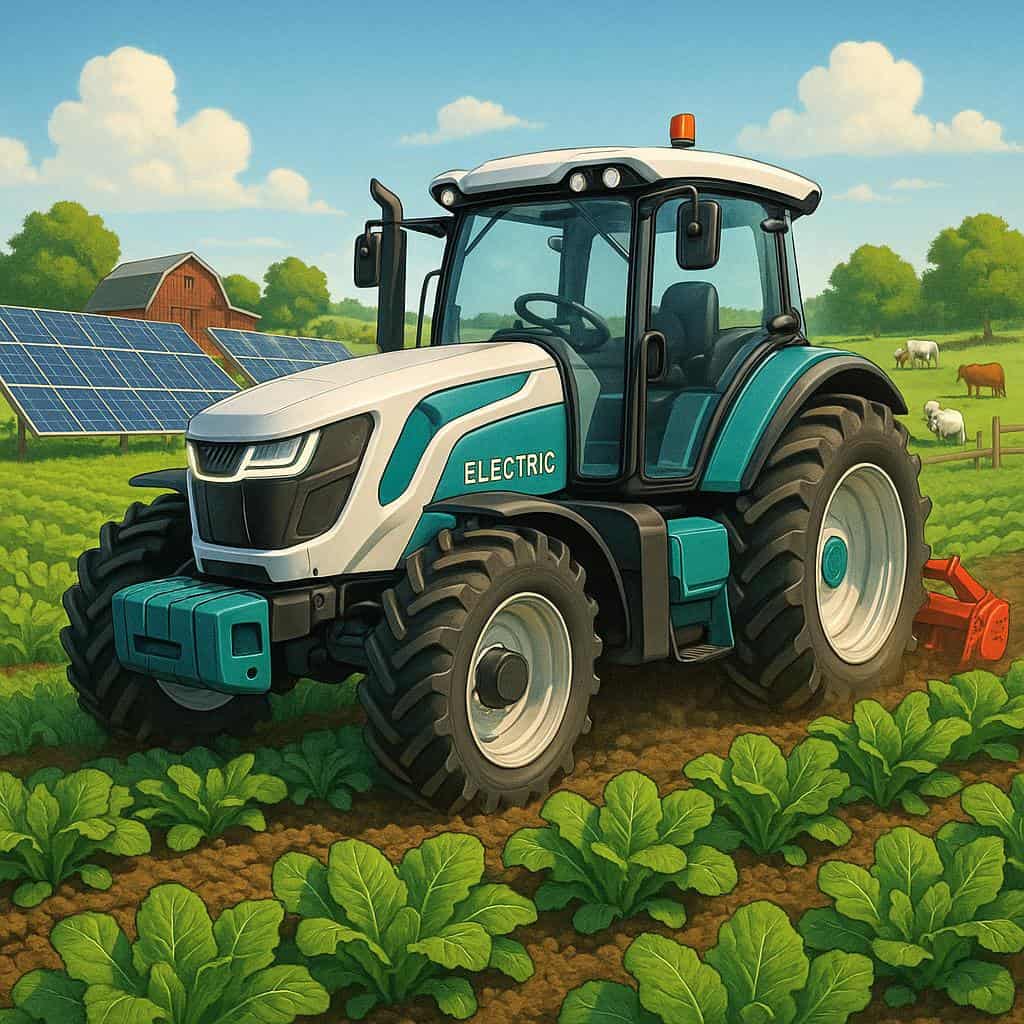
Many farms today are using solar panels or wind turbines to create their own electricity. Electric tractors connect perfectly with this clean power. They can be charged right on the farm using electricity made from the sun or wind. That means farmers don’t have to buy diesel fuel, helping them cut down on fossil fuel use and save money.
Some farms, like Forest Lodge Orchard in New Zealand, even sell extra solar energy back to the grid. This shows how using electric tractors and renewable energy together creates a cycle of green farming that’s good for the planet and farmers’ wallets.
Electric tractors are especially helpful for organic farms and small farms that want to stick to green farming practices. They show customers that these farms care about the environment and want to protect it. There are also some government programs that help farmers buy electric tractors by offering financial support or tax credits. This makes it easier for more farms to join the movement toward sustainable farming.
In 2025, electric tractor technology is getting better and better. The John Deere E-Power tractor, which was shown at the Agritechnica trade show, is a powerful example. It has a 130-horsepower motor and uses special liquid-cooled batteries that can charge quickly and last a long time. Farmers can charge the tractor with fast chargers in about an hour or do slower charging overnight.
This tractor works with all the usual farm tools and offers smooth power without needing gears or clutches. It also has smart features that let farmers watch how the tractor is doing from far away using apps. Plus, it’s ready for the future with options for self-driving and helping farmers use data to grow better crops.
Monarch Tractor’s MK-V is another smart electric tractor. It can be driven by a farmer or operated on its own and has technology that collects helpful information about the farm. Both John Deere and Monarch are pushing the tech forward with better batteries, modular designs, and more charging options.
These innovations make electric tractors easier to use, more powerful, and ready to fit into smart, sustainable farms everywhere.
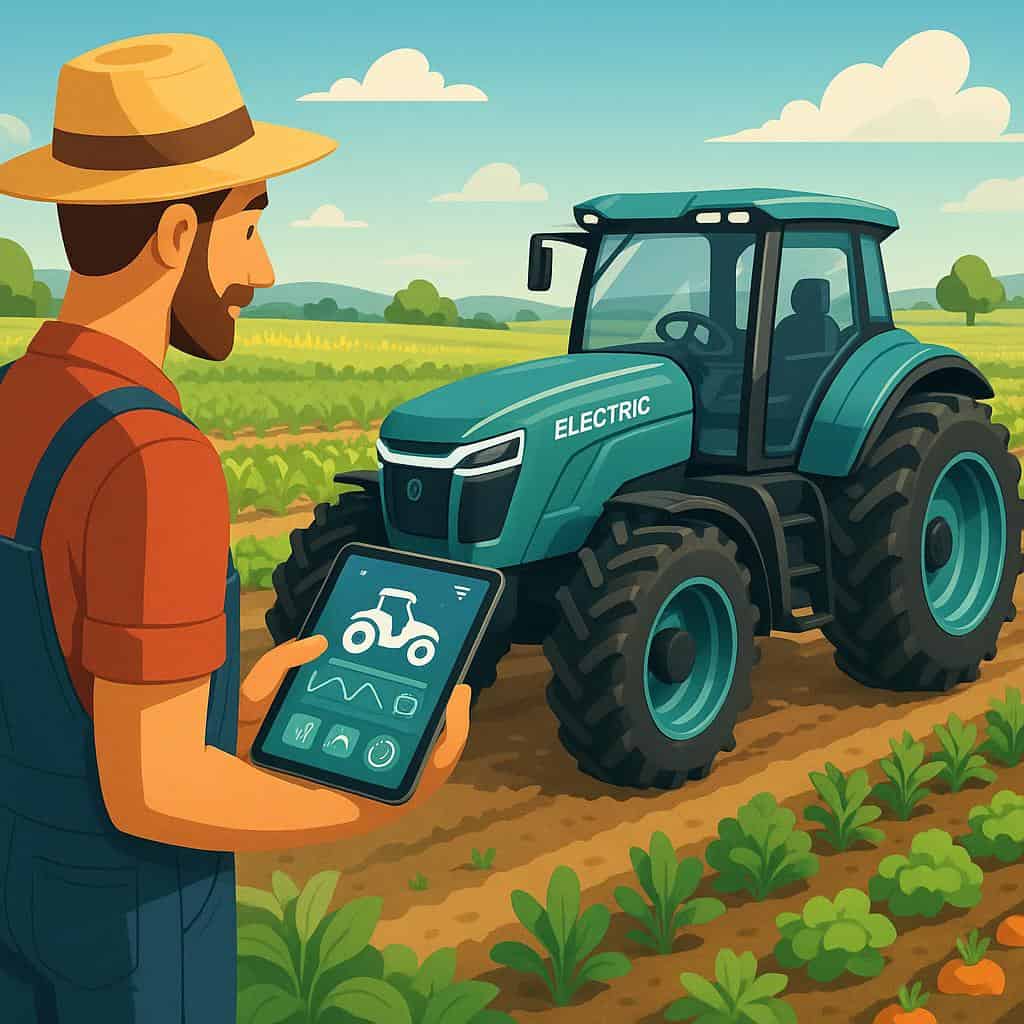
While electric tractors bring many great benefits, they aren’t perfect for every farm—at least not yet. Battery life can be shorter than diesel fuel tanks, which means tractors might need to recharge during the workday. The upfront cost is also higher for an electric tractor compared to a diesel one, which can be a big investment.
Charging stations might be hard to find in some rural areas, so farmers will need to set up reliable charging infrastructure on their farms. Some farmers worry about things like ground clearance or whether electric tractors have enough power for all their tasks.
However, many farmers are finding electric tractors well-suited for smaller jobs, specialty crops, and quiet farm environments. Researchers and companies are also working on new battery technologies and faster charging to fix these issues soon.
Financial help through government incentives can also make switching to electric tractors easier. Over time, savings from fuel and maintenance costs can balance out the initial price. Farmers thinking about electric tractors should consider their farm size, what tasks they do, if they have access to charging, and if saving emissions fits their goals.
The future for electric tractors looks bright. By 2026, companies like John Deere plan to have electric tractors ready for customers. More farmers want to farm sustainably, and clean technology keeps getting better and cheaper.
As electric tractors grow in popularity, they will work alongside other green farming tools like solar power, AI systems for precision farming, and even hydrogen or biofuel tractors. Together, these technologies can help farms run more efficiently while caring for the environment.
Electrification is just one piece of the bigger puzzle in eco-friendly farming, but it’s a very important one. It shows that farming can be both productive and gentle on the planet. Farmers, communities, and everyone who cares about healthy food and clean air will benefit from this shift.
Electric tractors are helping shape farming into a smarter, greener, and more sustainable way of growing food—starting right now.
Traveling into the future of farming, electric tractors bring hope that our farmland can stay healthy for many generations. They prove that technology and nature can work hand in hand, growing food while caring for the Earth.
Thinking about ways to make farming kinder to the planet? Electric tractors might be the perfect place to start.

Discover how to avoid booking traps with our ultimate guide on heritage stay Kolkata packages. Enjoy an authentic experience without the pitfalls!

Discover how to avoid booking traps with our ultimate guide on heritage stay Kolkata packages. Enjoy an authentic experience without the pitfalls!